


 English
 русский
 Español
Industry News
What Affects Hammer Drill Piston Performance?
In many power tool repair cases, a hammer drill piston is inspected only after the tool shows reduced impact force or unstable drilling behavior. At first glance, the motor is usually suspected, but in practice, the internal movement of the hammer drill piston often plays a more direct role in performance changes than expected.
A hammer drill piston works inside a tightly controlled impact chamber, where small variations in movement, lubrication, and surface contact can gradually influence output strength. The tool may still operate normally, but the impact energy becomes less consistent over time.
In workshop observations, a hammer drill piston rarely fails suddenly. Instead, performance shifts slowly, making early diagnosis difficult without internal inspection.
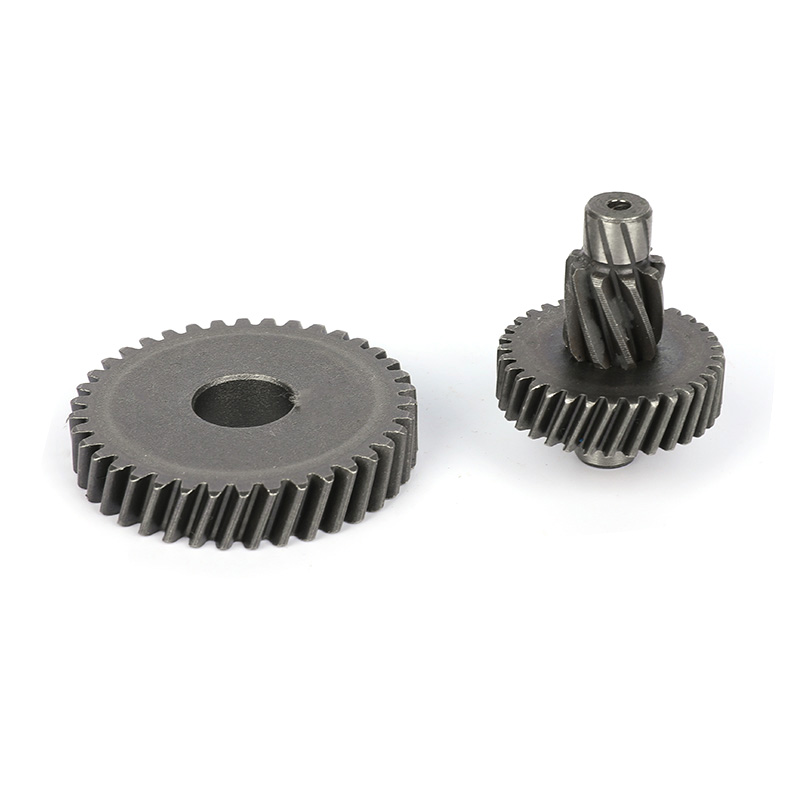
Internal motion stability and load transmission
The main function of a hammer drill piston is to transfer mechanical energy into impact force. When movement becomes slightly restricted due to wear or contamination, the energy transfer process is affected.
A hammer drill piston under normal condition maintains smooth forward and backward motion. Once resistance increases, even slightly, the impact cycle begins to lose efficiency. This is often mistaken for electrical issues or motor weakness during initial troubleshooting.
Common influencing factors in real operation
Different working environments can affect how a hammer drill piston performs over time. Dust, repeated high-load drilling, and inconsistent lubrication are frequently observed conditions in repair records.
|
Factor |
Observation in use |
Effect on hammer drill piston |
|
Dust accumulation |
Fine particles entering housing |
Slower piston movement |
|
Lubrication aging |
Grease thinning over time |
Increased friction |
|
High-load drilling |
Continuous concrete impact |
Surface wear acceleration |
|
Temperature changes |
Tool heating during long use |
Expansion affecting clearance |
Each of these factors does not immediately stop a hammer drill piston, but gradually changes its movement stability during operation.
Relationship between piston movement and impact efficiency
A hammer drill piston does not operate alone. It works with the striker system and air compression chamber inside the tool body. When piston motion becomes inconsistent, the compression cycle is affected, which directly reduces impact force.
In some maintenance cases, technicians first replace electrical components, assuming the issue is power-related. However, the hammer drill piston condition remains the actual limiting factor for output strength.
This is why performance recovery is sometimes incomplete until internal mechanical inspection is performed.
Wear patterns observed during inspection
When a hammer drill piston is removed for inspection, technicians usually look at movement smoothness, surface condition, and contact alignment rather than only visible damage.
uneven polishing marks on piston surface
slight delay in return motion during manual testing
increased friction during dry movement check
minor scoring inside cylinder wall
inconsistent rebound behavior under pressure
These signs often indicate that a hammer drill piston is still functional but no longer operating within optimal movement tolerance.
Operating behavior before noticeable failure
In real use, a hammer drill piston rarely stops working completely without warning. Instead, the tool begins to feel less responsive during drilling, especially under harder materials like concrete or stone.
Operators may notice that drilling speed remains similar, but penetration efficiency decreases. This subtle change is often the first sign that a hammer drill piston is no longer performing at stable levels.
Over time, repeated operation under these conditions increases internal friction, which further affects impact consistency.
Maintenance perspective in practical use
From a maintenance point of view, a hammer drill piston is evaluated not only by failure but by performance stability. Small variations in movement are often used as indicators for early servicing decisions.
Instead of waiting for complete malfunction, technicians often rely on performance feedback during operation. A hammer drill piston showing irregular impact behavior is typically inspected before secondary components are affected.
This approach helps maintain tool stability and avoids cascading wear across other internal parts.
Copyright © Yongkang Creator Import & Export Co.,Ltd. All Rights Reserved.

Power Tools and Other Universal Spare Parts Manufacturer