


 English
 русский
 Español
Industry News
Why Carbon Brush Holders Matter in Power Tool Motors?
When people talk about brushed power tool motors, they usually bring up the carbon brush first. The brush wears out, it sparks sometimes, and you have to replace it every so often. That part gets all the attention.
But there is another piece sitting right behind that brush that does not get talked about as much. It is called a carbon brush holder for power tools, and without it, the brush would not stay where it needs to be for more than a few seconds.
More than just a place to stick the brush
A carbon brush holder for power tools is not just a plastic box that holds the brush in place. It is actually a guide rail. The brush sits inside it, and as the brush wears down, it slides forward through the holder channel to stay pressed against the spinning commutator.
If the holder were not there, the brush would tilt, jam, or bounce around as soon as the motor started vibrating. That means lost contact, heavy sparking, and a tool that stops working pretty fast.
The holder keeps the brush moving in one direction only. Straight ahead. No wobble. No side to side shift.
How it handles vibration and movement
Power tool motors run at high speeds. An angle grinder or a circular saw creates a lot of vibration inside the housing. That vibration wants to shake every part loose, including the brush.
A carbon brush holder for power tools is designed to hold the brush firmly enough that it does not rattle, but not so tight that it cannot slide forward as it wears. Getting that balance right is what makes a good holder different from a bad one.
If the channel is too loose, the brush vibrates and sparks excessively. If it is too tight, the brush sticks and loses contact with the commutator. Either way, the motor runs poorly.
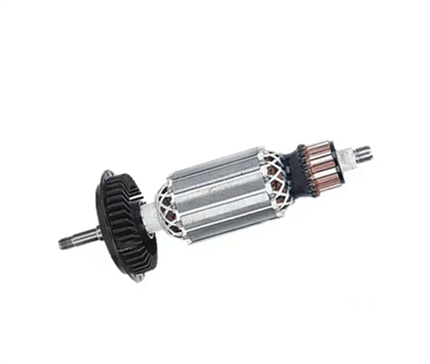
Pressure management behind the scenes
Behind every carbon brush, there is a small spring. That spring pushes the brush toward the commutator. But the spring alone does not determine how well the brush contacts the surface.
The carbon brush holder for power tools guides the direction of that spring force. If the holder keeps the brush perfectly aligned, the spring pressure goes straight into the commutator. If the holder allows the brush to sit at even a slight angle, the pressure becomes uneven. One side of the brush wears faster than the other.
That uneven wear is a common reason why some brushes last half as long as they should.
Dealing with dust and heat
Power tools do not run in clean rooms. They get used on job sites, in garages, and outdoors. Dust, dirt, and fine metal particles find their way inside the motor housing.
A carbon brush holder for power tools has to keep working even when small debris gets into the channel. If dust builds up, the brush can start sticking. That is why most holders are made from smooth, low-friction materials that resist wear and do not grab onto particles easily.
Heat is another issue. The area around the commutator gets hot during extended use. The holder needs to hold its shape at those temperatures. If it warps or softens, the brush alignment goes off, and the motor performance drops.
Different tools use different holder designs
smaller compact holders for drills and drivers
beefier reinforced holders for grinders and saws
multi-piece holders for heavy duty continuous use tools
integrated holders built directly into the motor housing
A carbon brush holder for power tools is usually matched to a specific brush size and spring tension. You cannot just swap holders between different tools and expect them to work the same way.
What happens when the holder wears out
People often blame the brush when a tool starts acting up. But sometimes the holder is the real issue. Over time, the inside of the holder channel can wear down or develop grooves. Once that happens, the brush does not slide smoothly anymore.
A worn holder can cause the same symptoms as a worn brush. Intermittent power, sparking, and weak motor performance. But replacing the brush does not fix it because the problem is not the brush itself.
In those cases, you have to replace the carbon brush holder for power tools or sometimes the entire brush assembly.
Copyright © Yongkang Creator Import & Export Co.,Ltd. All Rights Reserved.

Power Tools and Other Universal Spare Parts Manufacturer