


 English
 русский
 Español
Industry News
Charger for Power Tools Buyers Now Prioritize Cross-Platform Fit
Sourcing conversations around a Charger For Power Tools have shifted noticeably over the past couple of years. Buyers used to ask almost exclusively about charge time. Now the opening question is often about how many different battery platforms one power tool charger can service without triggering a compatibility fault.
Fleet Buyers Are Done Managing a Charger Per Brand
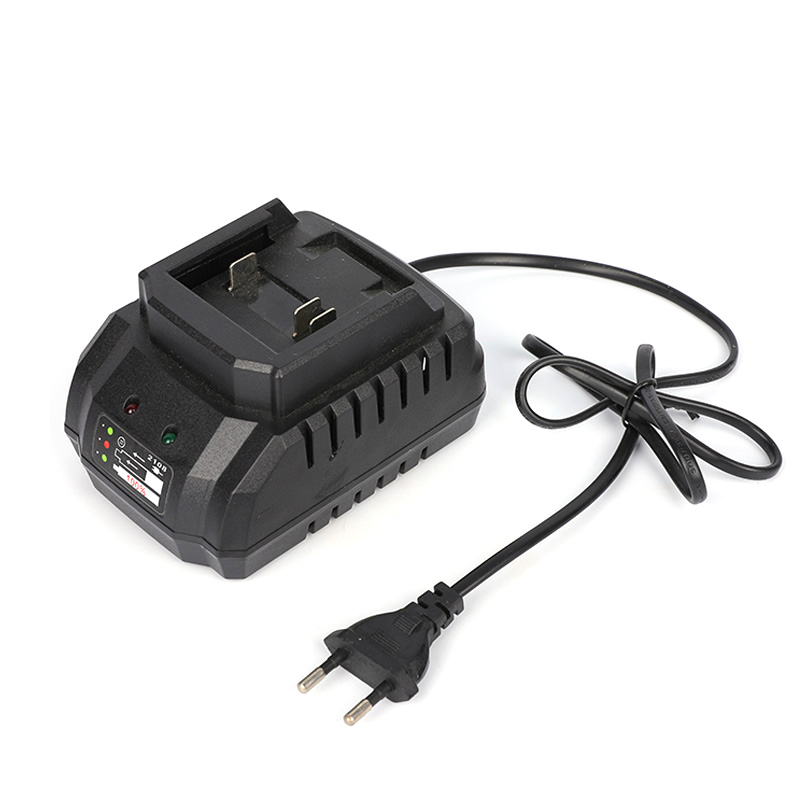
A construction contractor or rental fleet running tools from three or four different brands used to accept that each brand needed its own charger, cable, and storage slot. That's changing as buyers push suppliers to develop a Charger For Power Tools with interchangeable connector heads or auto-detecting voltage circuits that can service multiple pack designs from a single base unit. A universal power tool charger cuts down on the physical clutter of a job-site charging station and reduces the chance of grabbing the wrong charger for a given pack under time pressure.
Auto-Detection Circuits Carry More Engineering Risk Than They Look Like They Do
Getting a Charger For Power Tools to correctly identify pack voltage and chemistry before applying current sounds simple in a spec sheet but requires more sophisticated multi-voltage charging circuit design than a single-platform charger needs. A charger that misreads pack voltage even occasionally risks either undercharging a pack — leaving a tool with less runtime than expected — or, in a worse case, overcharging in a way that stresses cells and shortens pack life. Buyers evaluating multi-platform chargers should ask for documented fault-detection testing across every pack type the charger claims to support, not just the flagship platform used in marketing photos.
|
Charging Approach |
Single-Platform Charger |
Cross-Compatible Charger |
|
Job-site clutter |
One charger per brand |
One unit for multiple packs |
|
Circuit complexity |
Simpler, fixed voltage detection |
More complex auto-detection needed |
|
Risk if detection fails |
Low, single known pack type |
Higher, must correctly ID varied packs |
|
Buyer appeal |
Predictable, lower engineering cost |
Reduced equipment count, fleet efficiency |
Fast-Charging Claims Need a Duty-Cycle Reality Check
Faster charge times sell well on a spec sheet, but pushing more current into a pack faster generates more heat, and heat is the primary driver of long-term capacity loss in lithium cells. A supplier offering aggressive fast-charge specs on a Charger For Power Tools without corresponding thermal management inside the charger housing is trading long-term pack health for a shorter number on the box. Buyers should ask how a charger regulates current as pack temperature rises during a fast-charge cycle, since a charger that can't throttle appropriately will shorten the life of every pack it services regularly.
Safety Certification Gets More Complicated With Multi-Platform Designs
Lithium battery charging safety certification for a single-platform Charger For Power Tools is relatively straightforward, since the charger only ever sees one pack chemistry and voltage range. A cross-compatible charger has to be certified across every combination it claims to support, and buyers importing into regulated markets should confirm that certification testing actually covers each supported platform individually rather than extrapolating from testing on just one.
Where an OEM Charger Manufacturer's In-House Testing Actually Pays Off
An OEM charger manufacturer running its own lab can validate a new multi-platform Charger For Power Tools design against real battery packs from several brands before it ships, rather than relying on theoretical compatibility based on published voltage specs alone. This kind of pre-production verification is what separates a Charger For Power Tools that quietly works across a fleet's mixed tool inventory from one that technically claims compatibility but faults intermittently once it's out in the field.
Copyright © Yongkang Creator Import & Export Co.,Ltd. All Rights Reserved.

Power Tools and Other Universal Spare Parts Manufacturer