


 English
 русский
 Español
Industry News
Home / News / Industry News / What Role Does the Armature for Power Tools Play in Tool Reliability You Don't See?
When we pick up a drill, grinder, or circular saw, we usually focus on its shape, brand, or battery life. Rarely do we think about the internal components that make it function. Hidden inside the housing, the Armature for Power Tools plays a central role in converting electrical energy into mechanical motion. Without it, the tool simply would not operate.
Although small compared to the entire machine, this rotating component determines how smoothly, efficiently, and reliably a tool performs. Understanding its function offers insight into why some tools feel steady and durable while others struggle under load.
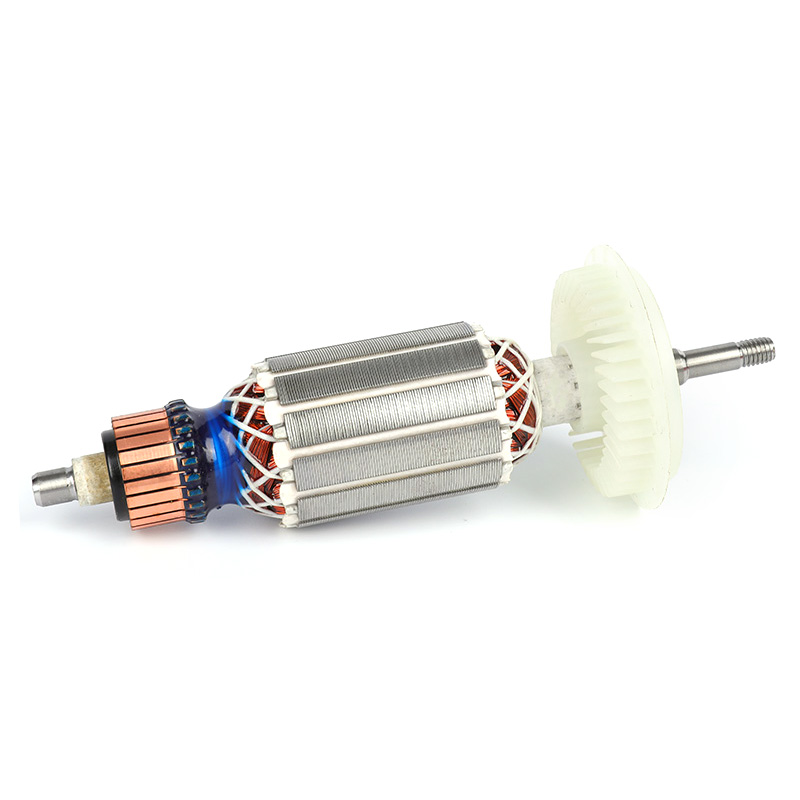
The Armature for Power Tools is part of the motor's rotating assembly. When electric current flows through the windings, it interacts with the magnetic field generated by the stator. This interaction produces rotational force, which drives the shaft connected to the tool's working mechanism.
Whether cutting wood or grinding metal, the motion originates from this core component. The precision of winding, the quality of copper wire, and the balance of the rotor all influence vibration levels and torque output. Even slight inconsistencies can affect overall performance.
A well-manufactured Armature for Power Tools ensures stable rotation, which translates into smoother operation and reduced wear on surrounding parts.
Power tools often operate under demanding conditions. Continuous drilling or cutting generates heat, and the armature must withstand these temperature changes without losing efficiency. Insulation materials around the windings protect against short circuits, while proper ventilation in the tool housing helps dissipate heat.
If the Armature for Power Tools overheats frequently, it may cause carbon brush wear or motor failure. This is why quality materials and careful assembly are essential. Balanced construction reduces friction and minimizes unnecessary strain on bearings.
Regular maintenance also plays a role. Keeping vents clear of dust and replacing worn brushes on time can extend the lifespan of the armature and the entire tool.
Different applications require different motor characteristics. High-speed rotation suits cutting tasks, while higher torque benefits drilling through dense materials. The design of the Armature for Power Tools influences these outcomes.
Manufacturers may adjust winding patterns or core dimensions to match specific tool purposes. For example, a grinder designed for heavy-duty work may require a more robust rotor compared to a compact household drill.
The connection between internal motor design and external performance becomes clear when comparing tools side by side. The armature is not visible, yet it directly affects user experience.
Producing an Armature for Power Tools involves careful balancing and testing. Any imbalance during rotation can cause vibration, noise, or premature bearing damage. Factories often use dynamic balancing equipment to ensure that each unit rotates evenly at high speeds.
Quality control includes electrical testing to confirm resistance levels and insulation reliability. This attention to detail reduces the risk of breakdown during use and supports consistent output across batches.
As demand for cordless and compact tools grows, lightweight yet durable armature designs are increasingly important. Engineers continue refining materials and construction methods to meet these needs.
It is easy to overlook what we cannot see. Yet the Armature for Power Tools carries significant responsibility within every electric tool. It drives movement, manages heat, and influences both efficiency and longevity.
From construction sites to home workshops, tools depend on this rotating core to deliver reliable performance. When the armature functions well, the entire machine operates smoothly. When it fails, productivity slows down.
In many ways, the armature represents the quiet strength of power tools—working tirelessly behind protective casings, transforming electricity into the motion that shapes wood, metal, and concrete every day.
Copyright © Yongkang Creator Import & Export Co.,Ltd. All Rights Reserved.

Power Tools and Other Universal Spare Parts Manufacturer