


 English
 русский
 Español
Industry News
Angle Grinder Carbon Brush Wear Changes With Workload?
An Angle Grinder Carbon brush is a small consumable component, but its working environment is considerably more demanding than its size suggests. Inside a brushed angle grinder, the carbon brush maintains electrical contact with the rotating commutator while the motor operates at high speed. Continuous grinding, cutting, dust exposure, vibration, and changes in workload can all influence how quickly the brush wears.
Carbon Brushes Work Through Continuous Contact
The basic role of an Angle Grinder Carbon brush is to transfer electrical current between the stationary brush assembly and the rotating commutator. A spring usually pushes the brush toward the commutator while allowing it to move gradually as material is consumed.
This creates a controlled wear process. The brush is expected to become shorter during normal use, which is why carbon brushes are considered replaceable motor components rather than permanent parts.
The supplier's power-tool spare-parts information identifies carbon brushes as electrical conductors between the commutator and armature, while also listing brush holders as components that maintain brush alignment.
Grinding Conditions Can Accelerate Wear
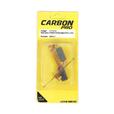
An angle grinder rarely operates under one constant workload. Cutting thin material, grinding a heavy weld, polishing a surface, and removing rust can place different demands on the motor.
When the motor works under heavier load, current demand and heat generation can change. For an Angle Grinder Carbon brush, this can affect the contact conditions at the commutator and potentially accelerate material loss.
This does not mean that every increase in operating temperature indicates brush failure. Brush wear depends on several factors, including the motor design, commutator condition, spring pressure, workload, operating duration, and the characteristics of the carbon material.
Dust Creates Another Operating Variable
Angle grinders are commonly used in environments where fine particles are produced during cutting and grinding. Some of this dust can enter the tool housing and reach the motor area.
For an Angle Grinder Carbon brush, dust can become relevant because the brush needs to slide correctly within its holder while maintaining contact with the commutator. Accumulated debris can interfere with movement or contribute to contamination around the electrical contact area.
This is one reason brush inspection should not focus only on remaining length. The condition of the holder, commutator, spring, and surrounding motor area can provide additional information about how the brush assembly has been operating.
Uneven Wear Can Point to Other Problems
A carbon brush does not always wear evenly. If the brush sits incorrectly, the holder is damaged, spring pressure changes, or the commutator surface is irregular, the contact pattern can become uneven.
For an Angle Grinder Carbon replacement, this distinction matters. Installing a new brush may restore operation temporarily, but if the underlying contact problem remains, the replacement can wear unusually quickly.
The brush holder plays a particularly important role because it guides the brush toward the commutator. Industry maintenance information from the same supplier notes that excessive clearance can allow brush movement and vibration, while excessive restriction can prevent the brush from sliding properly.
Brush Length Is Only One Inspection Point
Many maintenance checks begin by examining how much carbon remains. This is useful, but it does not provide the complete picture.
An Angle Grinder Carbon brush can also be inspected for cracking, chipping, unusual surface marks, or uneven wear. The commutator should also be examined because a damaged contact surface can affect a new brush after installation.
For repair workshops and distributors, these observations can help distinguish ordinary consumable wear from a problem involving the wider motor assembly.
Replacement Requires the Correct Specification
Carbon brushes are not universally interchangeable. Dimensions, terminal configuration, spring arrangement, holder compatibility, and contact geometry can differ between angle grinder models.
This means an Angle Grinder Carbon replacement should be matched to the relevant tool model or original component specification. A brush that appears similar in size may still have a different electrical or mechanical interface.
The supplier's product range includes carbon brushes among its power-tool spare parts and covers components for different power-tool applications.
For B2B buyers, maintaining accurate model and part-number information can therefore be useful when managing replacement inventory across multiple grinder models.
Brush Replacement Is Part of Motor Maintenance
An Angle Grinder Carbon brush is designed to wear, so replacement is a normal part of maintaining many brushed power tools. The more useful question is not simply when the brush reaches a certain length, but whether its wear pattern corresponds with normal operation.
Workload, dust, heat, commutator condition, spring pressure, and holder alignment can all influence brush behavior. Examining these factors together gives repair technicians a clearer view of the motor's condition and can help prevent a new brush from being installed into a system with an unresolved contact problem.
For manufacturers, distributors, and repair businesses, carbon brush specifications therefore remain closely connected with the design of the complete motor assembly. A small consumable part can reveal much about how the grinder has been operating and what other components may need attention during maintenance.
Copyright © Yongkang Creator Import & Export Co.,Ltd. All Rights Reserved.

Power Tools and Other Universal Spare Parts Manufacturer